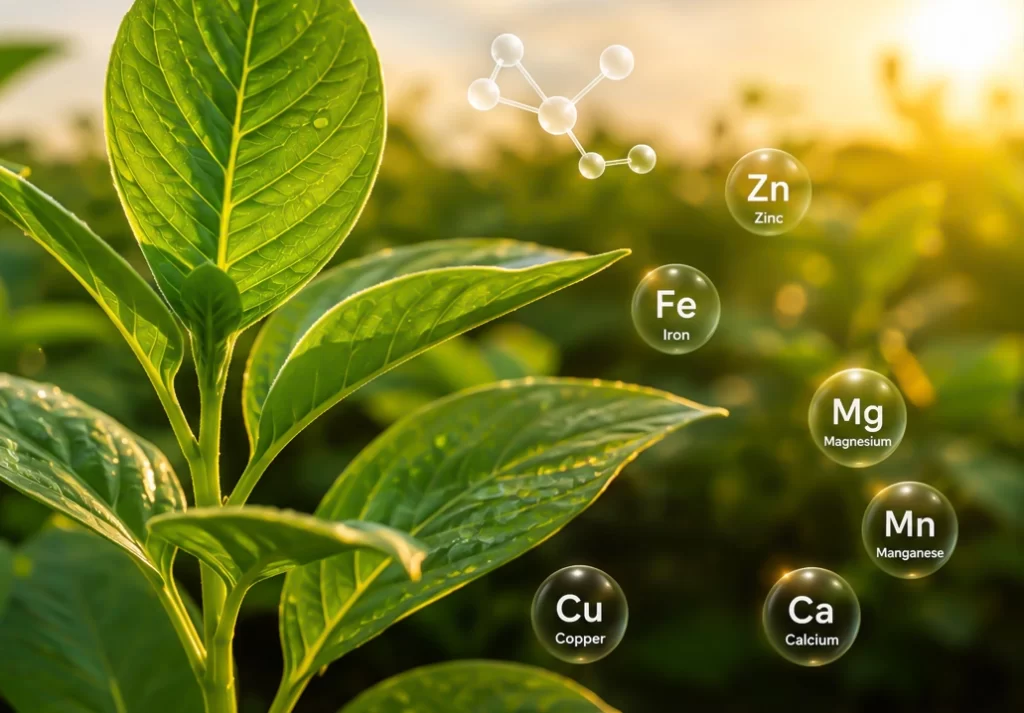
Amino Acids & Chelates: Smarter Nutrition for Modern Agriculture
Modern agriculture is moving toward more efficient and scientifically managed crop nutrition. Farmers today are not only focused on supplying nutrients to crops but also on improving nutrient availability, uptake, utilization, and overall plant performance.
Two important tools in modern crop nutrition are amino acids and chelated micronutrients. When used appropriately as part of a balanced nutrition program, they can help address specific crop requirements and support efficient nutrient management.
What Are Amino Acids?
Amino acids are organic compounds that serve as the building blocks of proteins. They are naturally involved in numerous plant processes, including growth, metabolism, enzyme activity, and stress responses.
Amino-acid-based agricultural products are commonly used as part of crop nutrition and biostimulant programs.
They can be derived from different sources and may be applied through foliar sprays, soil applications, or other recommended methods depending on the formulation.
Why Are Amino Acids Important for Crops?
Plants naturally produce amino acids, but under demanding environmental conditions, supporting plant metabolism can become an important consideration.
Amino-acid-based formulations may help support:
Plant Growth & Development
Amino acids participate in many physiological processes associated with plant growth and development. They can complement a well-balanced crop nutrition program.
Stress Management
Crops may face heat, drought, salinity, transplanting stress, or other unfavorable conditions.
Certain amino-acid formulations are used to support plant recovery and physiological activity during stressful growing conditions.
Nutrient Utilization
Amino acids can interact with nutrients and may be incorporated into nutrition programs designed to support nutrient uptake and utilization.
Flowering & Crop Development
Amino-acid-based products may be used during important crop development stages to support plant metabolism, flowering, fruit development, and overall crop performance.
What Are Chelates?
Micronutrients such as Iron, Zinc, Manganese, Copper, and other essential elements are required by plants in relatively small quantities.
However, these nutrients can become unavailable to plants because of soil pH, chemical reactions, moisture conditions, and other factors.
Chelation is a technique used to bind a metal nutrient with an organic molecule, helping maintain the nutrient in a more available form under suitable conditions.
Common examples include:
- Iron chelates
- Zinc chelates
- Manganese chelates
- Copper chelates
Chelated micronutrients are widely used in modern crop nutrition because they can provide a more controlled and efficient way of supplying certain micronutrients.
Why Are Chelated Micronutrients Important?
Improved Nutrient Availability
Chelation can help keep certain micronutrients in a form that is more accessible to plants, depending on the nutrient, chelating agent, and growing conditions.
Better Micronutrient Management
Chelated products can be useful when crops require specific micronutrients and conventional nutrient sources may not provide adequate availability.
Support for Healthy Plant Development
Micronutrients play important roles in photosynthesis, enzyme activity, chlorophyll formation, flowering, reproductive development, and many other physiological processes.
Targeted Nutrition
Chelated micronutrients allow farmers to address specific nutrient requirements rather than relying only on generalized fertilizer applications.
Amino Acids and Chelates: A Complementary Approach
Amino acids and chelated micronutrients have different roles, but they can complement each other within an integrated crop nutrition program.
Amino acids primarily support plant physiological processes and metabolism, while chelates are primarily used to improve the management and availability of specific micronutrients.
When properly formulated and applied, combining these approaches can help create a more efficient crop nutrition strategy.
For example:
Chelated Micronutrients → Provide targeted micronutrient nutrition
Amino Acids → Support plant metabolism and physiological activity
Balanced Fertilization → Provides the major and secondary nutrients required by the crop
Together, these components can form part of a comprehensive nutrition program.
Where Can They Be Used?
Amino-acid and chelated micronutrient products may be used across a wide range of agricultural and horticultural crops, depending on the product formulation.
Potential applications include:
- Cereals
- Pulses
- Oilseeds
- Vegetables
- Fruits
- Plantation crops
- Floriculture
- Protected cultivation
- Commercial horticulture
Application timing and dosage should always be determined according to the crop, product formulation, and manufacturer’s recommendations.
The Importance of Correct Application
More nutrients do not necessarily mean better crop performance.
The effectiveness of any crop nutrition program depends on the right nutrient, right dose, right timing, and right application method.
Before applying amino acids or chelated micronutrients, farmers should consider:
- Crop type
- Crop growth stage
- Soil condition
- Existing nutrient program
- Nutrient deficiency
- Water quality
- Application method
- Product compatibility
- Recommended dosage
Soil and plant testing can also help identify specific nutrient requirements.
Moving Toward Smarter Crop Nutrition
Agriculture is becoming increasingly precise. Instead of applying nutrients uniformly, modern crop management focuses on understanding the specific requirements of the crop and field.
Amino acids and chelated micronutrients fit into this evolving approach by providing tools for targeted nutrition, improved nutrient management, and better crop-care strategies.
As technology, formulation science, and precision agriculture continue to advance, these solutions are expected to play an increasingly important role in modern farming.
Conclusion
Healthy crops require more than just the major nutrients. Micronutrients and plant-supporting compounds also play important roles in achieving balanced crop nutrition.
Amino acids can support plant metabolism and physiological processes, while chelated micronutrients can help improve the management and availability of essential micronutrients.
Used responsibly as part of a scientifically planned nutrition program, they can help farmers move toward more efficient, precise, and sustainable crop management.
Smarter Nutrition. Better Availability. Stronger Crop Management.
The future of agriculture lies in combining science, precision, and efficient nutrition to help crops reach their full potential.